
Ceramic Sealant vs Ceramic Coating: Which One Makes Sense for Your Car?
June 4, 2026Is a Touchless Car Wash Safe? What It Cleans and Misses
July 2026
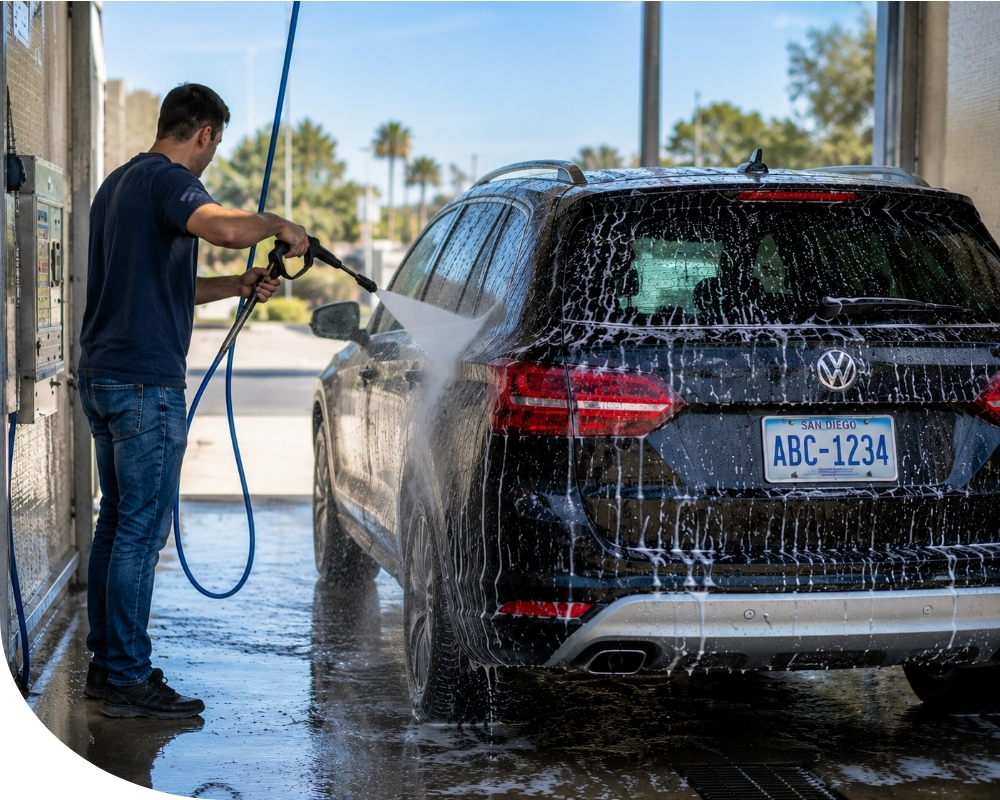
Touchless car washes have become a popular alternative to traditional automatic washes because they clean the vehicle without brushes touching the paint. For many drivers, that sounds like the safest option.
In many situations, it is.
A touchless wash does a good job of removing loose dirt and road grime, but it isn’t designed to solve every problem. If you’ve ever washed your car and noticed the paint still feels rough or water spots remain, there’s a reason.
This guide explains where touchless washes work well, where they fall short and when professional detailing becomes the better choice.
How Does a Touchless Car Wash Work?
Unlike a traditional automatic car wash, a touchless system cleans the vehicle without brushes or cloth strips making contact with the paint.
Instead, it relies on high-pressure water and specially formulated detergents to loosen and rinse away surface dirt. The lack of physical contact greatly reduces the chance of scratches caused by contaminated brushes or wash materials.
Most touchless washes follow the same basic process:
- Pre-soak with cleaning solution
- High-pressure rinse
- Spot-free rinse
- Air drying
The entire wash usually takes just a few minutes, making it a practical option for removing everyday dirt when your vehicle doesn’t need a deeper clean.
What Touchless Car Washes Do Well
Touchless car washes serve an important purpose. Used as part of a regular maintenance routine, they offer several advantages.
Lower Risk of Swirl Marks
Because nothing physically touches the paint, there is less chance of creating the swirl marks that can happen with worn brushes or contaminated wash equipment.
This is one reason many owners of newer vehicles, black paint and luxury cars prefer touchless systems over traditional automatic washes.
Removes Everyday Dirt
Fresh dust, pollen, light mud and loose road grime are usually removed effectively during a touchless wash. For vehicles that are cleaned regularly, this is often enough to restore a noticeably cleaner appearance.
Great for Routine Maintenance
A touchless wash is a convenient way to remove everyday buildup between professional detailing appointments. It helps keep the exterior cleaner and reduces the amount of dirt sitting on the paint, especially if the vehicle is driven daily.
A touchless wash is a practical maintenance tool. The key is understanding what it’s designed to do and where its limitations begin
What a Touchless Car Wash Doesn’t Remove
A touchless car wash is very effective at removing loose dirt from the surface of your vehicle. The challenge is that not everything sitting on your paint is loose.
Over time, contaminants bond to the clear coat and become difficult to remove with water and detergents alone. Even if the car looks clean after the wash, the surface may still feel rough when you run your hand across it.
Some of the most common examples include:
- Road film that gradually builds up on the paint
- Brake dust and industrial fallout that bond to the surface
- Dried bug residue on the front bumper and mirrors
- Light tree sap that has started adhering to the clear coat
- Mineral deposits left behind by hard water
These contaminants require more than a high-pressure rinse. Professional exterior detailing removes them through a combination of safe hand washing, paint decontamination and, when needed, clay bar treatment before paint protection is applied.
If your vehicle still feels rough after a wash, it’s usually a sign that bonded contamination remains on the surface.
Can High Pressure or Strong Chemicals Damage Your Car?
One of the biggest misconceptions about touchless car washes is that the high-pressure water is what damages paint.
In most cases, it doesn’t.
Modern automotive paint is designed to withstand pressure washing when the equipment is used correctly. The greater concern is how the water and cleaning products are applied.
High-Pressure Water
Pressure alone is not harmful to healthy automotive paint.
Problems are more likely to occur when the spray nozzle is held too close to the surface or directed at damaged paint, loose trim, old decals or existing rock chips. Under normal operating conditions, commercial touchless systems are designed to clean vehicles safely.
Cleaning Chemicals
Because there are no brushes scrubbing the paint, touchless systems rely on stronger detergents to loosen dirt before rinsing.
These products are formulated to work quickly, but frequent exposure may gradually reduce the effectiveness of waxes and other temporary paint protectants. They also don’t replace proper paint decontamination or protection.
For vehicles that receive regular detailing, this usually isn’t a concern. Fresh paint protection helps maintain the finish between washes.
The takeaway is simple: high pressure isn’t the problem most people think it is. A touchless wash simply has limitations because it cleans without physically contacting the surface.
When a Touchless Car Wash Makes Sense
A touchless car wash is a practical choice when your vehicle needs a quick refresh but doesn’t require a deep clean. It removes loose dirt and road grime without the brushes used in traditional automatic washes, making it a good option for routine maintenance.
A touchless wash is especially useful:
- After your daily commute to remove light road dust.
- Before a road trip when you want the vehicle looking clean.
- After light rain that leaves dirt or pollen on the paint.
- Between scheduled detailing appointments to maintain the finish.
- When the vehicle has only light surface dirt and no visible contamination.
Using a touchless wash regularly can help keep your vehicle looking cleaner between professional details. When the paint starts feeling rough, water no longer beads, or contaminants remain after washing, it’s time for a deeper level of care.
So, Is a Touchless Car Wash Safe?
Yes. For most vehicles, a touchless car wash is a safe way to remove loose dirt while reducing the risk of swirl marks associated with traditional automatic washes.
Like any maintenance method, it has limitations. It won’t remove bonded contamination, restore smooth paint or replace the deeper cleaning that comes with professional detailing.
Using a touchless wash between scheduled details is a practical routine for many drivers. When your vehicle needs more than a surface clean, professional detailing helps restore the finish and keep it protected for the months ahead.
Need More Than a Touchless Wash?
Call or text us for a free quote. We’ll recommend the right exterior detailing service for your vehicle.
FAQ
Yes. Weekly touchless washes are generally fine for removing loose dirt and helping maintain a clean exterior between professional details.
If possible, yes. Although many facilities offer spot-free rinses and air drying, using a clean microfiber drying towel can help prevent water spots, especially if the vehicle is exposed to direct sunlight immediately after the wash.
Brake dust often bonds to wheel surfaces and isn’t always removed by high-pressure water alone. Professional wheel cleaning uses dedicated products and tools to remove stubborn buildup safely.
Yes. Touchless washes are a good option for maintaining a ceramic-sealed vehicle between professional detailing appointments.
Not completely. Areas around door jambs, emblems, trim and panel gaps often retain dirt because they don’t receive the same cleaning attention as they do during a professional detail.