Is a Touchless Car Wash Safe? What It Cleans and Misses
July 6, 2026
Car Interior Smells Bad When It Gets Hot? Here’s Why
September 8, 2026How to Remove Water Spots From Car Paint Without Damaging the Clear Coat
August 2026
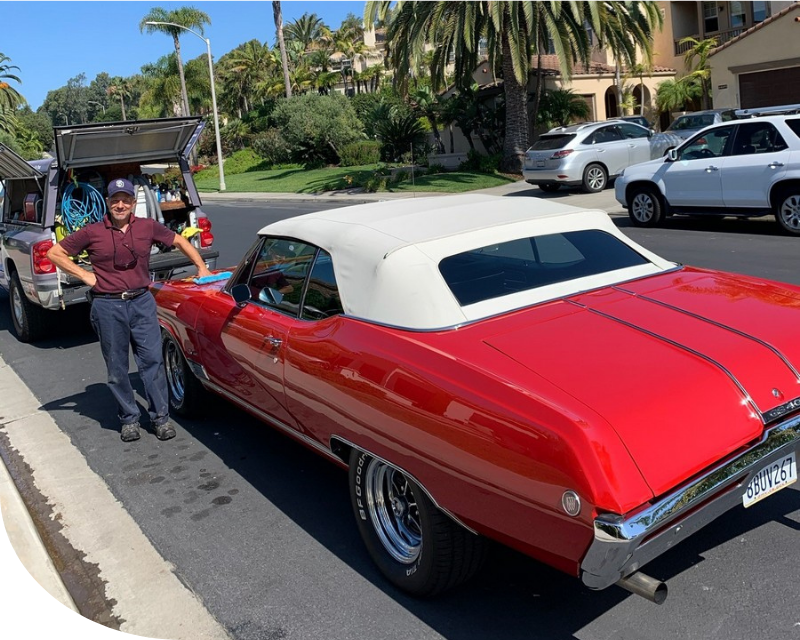
Water spots can remain visible even after a car has been thoroughly washed. Some are fresh mineral deposits that come off fairly easily. Others have bonded to the paint, while more serious spots may have already etched the clear coat.
Michael sees this regularly on vehicles across San Diego, especially cars parked outside or near landscaping where sprinklers repeatedly hit the same panels.
Before reaching for vinegar, compound or an abrasive pad, it helps to figure out what type of water spots you actually have.
Table of Contents:
- Why Water Spots Form on Car Paint
- The Three Types of Water Spots You Need to Know
- How to Remove Water Spots From Car Paint Safely
- What Not to Use on Water Spots
- Why Water Spots Are So Common on San Diego Cars
- Can Water Spots Permanently Damage Clear Coat?
- How to Prevent Water Spots From Coming Back
- Water Spots Won’t Come Off? Let Michael Take a Look
Why Water Spots Form on Car Paint
Tap water and sprinkler water contain dissolved minerals such as calcium and magnesium. When water dries on your vehicle, those minerals remain on the paint.
Fresh deposits may come off during a proper wash. They become more difficult to remove after repeated exposure, especially when the paint spends hours in direct sunlight.
This happens frequently in San Diego. A car parked next to sprinklers may get sprayed in the morning and then sit in the sun for the rest of the day.
Common causes include:
- Sprinklers hitting a parked vehicle
- Washing with hard water and allowing it to air-dry
- Washing a hot vehicle in direct sunlight
- Rain or moisture drying on already contaminated paint
- Repeated outdoor parking without regular paint protection
You may notice the problem most on the hood, roof and trunk because these horizontal panels hold water longer and receive heavy sun exposure.
The Three Types of Water Spots You Need to Know
Before trying to remove water spots, look at how they behave after the vehicle has been properly washed and dried.
Water spotting generally falls into three levels.
| What You’re Seeing | Likely Condition | What May Be Needed |
|---|---|---|
| Light spots that appeared recently | Surface mineral deposits | Proper wash or automotive water-spot remover |
| Stubborn spots that remain after washing | Bonded mineral deposits | Mineral removal and paint decontamination |
| Rings or cloudy marks that remain on clean, decontaminated paint | Possible clear-coat etching | Paint polishing |
Fresh deposits are usually the easiest to deal with and may disappear with a proper wash or dedicated water-spot remover.
Bonded Water Spots
If you’ve washed the vehicle and the spots are still clearly visible, the deposits may have been sitting long enough to become more difficult to remove.
This is common on vehicles that repeatedly get hit by sprinklers or sit outdoors for long periods.
At this stage, washing harder isn’t necessarily going to help. The paint may need a dedicated mineral-removal treatment followed by decontamination, depending on what is bonded to the surface.
Etched Water Spots
If the mineral deposit is gone but its outline remains, the clear coat may be etched. Stronger cleaners or repeated scrubbing won’t remove a defect that is already in the paint.
Light machine polishing may be needed to improve or remove the marks safely.
This is also where DIY water-spot removal can go wrong. A driver sees a stubborn mark, assumes it is still a deposit and keeps scrubbing. The water spot remains, but now the surrounding paint has fine scratches or dull patches as well.
If the paint is clean but the water-spot outline remains, don’t automatically reach for something more aggressive. The next step may be polishing, not stronger cleaning.
How to Remove Water Spots From Car Paint Safely
Once you have an idea of what you’re dealing with, start with the least aggressive method. This reduces the risk of creating scratches, haze or unnecessary clear-coat wear while trying to solve the original problem.
Step 1: Wash and Dry the Car First
Never start rubbing or treating water spots on dirty paint.
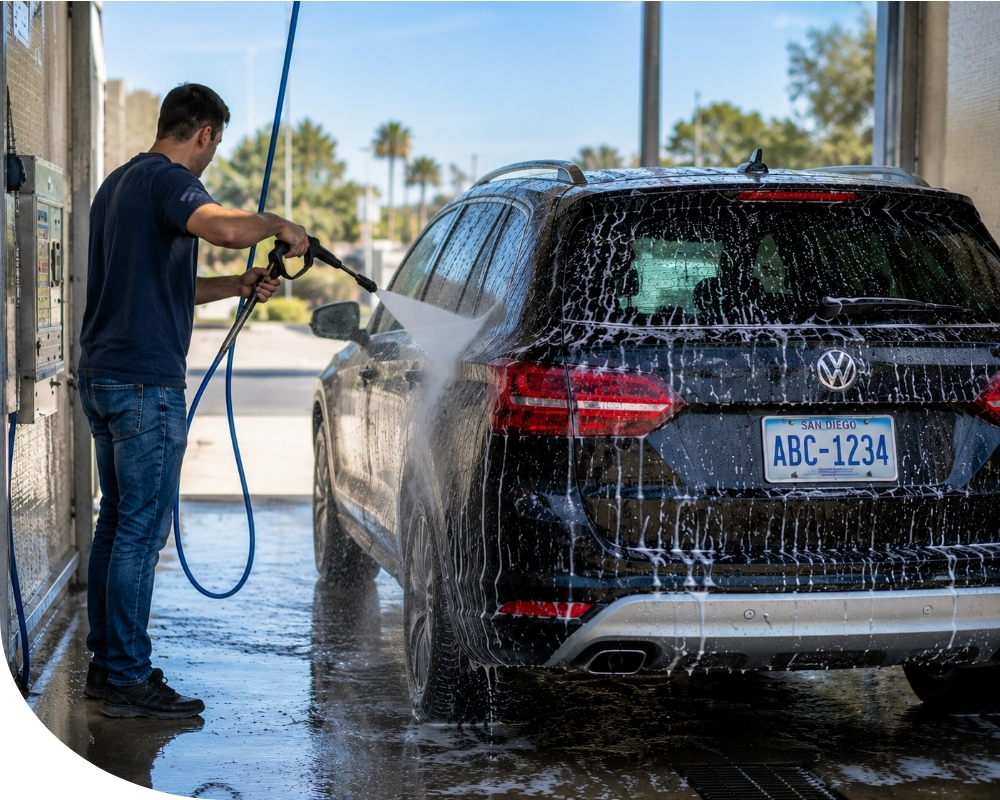
Dust, sand and road grime sitting on the surface can become abrasive when you start working on the affected area. Wash the vehicle thoroughly with a pH-balanced automotive shampoo and dry it with a clean microfiber towel.
If the spots disappear after washing, you were likely dealing with light surface deposits.
If they’re still visible, move to the next step.
Step 2: Use an Automotive Water-Spot Remover
For mineral deposits that remain after washing, a dedicated automotive water-spot remover is usually the next option.
These products are formulated to break down mineral deposits without requiring aggressive scrubbing. Follow the product directions carefully, work on cool paint and don’t allow the solution to dry on the surface.
Test a small area first.
If the spots begin disappearing with minimal effort, continue working one section at a time. Applying more product, leaving it on longer or pressing harder isn’t a good substitute for following the manufacturer’s directions.
If the spots don’t respond, stop and reassess the paint.
Step 3: Decontaminate the Paint if Needed
Water spots sometimes appear alongside other bonded contamination, which is why clean paint may still feel rough after washing. Clay-bar treatment can remove material that normal washing leaves behind.
Clay does not remove clear-coat etching. If the mineral deposit is gone but the mark remains, polishing may be needed.
Step 4: Polish the Paint When the Spot Has Etched the Clear Coat
If the mineral deposit is gone but its outline remains, the clear coat may need polishing. A light polish can improve or remove mild etching while restoring clarity and gloss.
This is where DIY correction becomes riskier. An aggressive compound, incorrect pad or too much polishing can remove more clear coat than necessary or leave haze and polishing marks behind.
Deeper water-spot damage should be inspected before attempting further correction.
What Not to Use on Water Spots
Some common DIY methods can create bigger problems for your paint. Avoid:
- Magic Erasers and abrasive pads: Can dull glossy paint and leave fine scratches, especially on dark colors.
- Razor blades or sharp tools: Scraping can easily damage the clear coat.
- Strong household cleaners: Bathroom descalers and similar products aren’t formulated for automotive paint.
- Heavy rubbing compound: Don’t jump straight to aggressive polishing. Many water spots can be removed without removing clear coat.
- Vinegar: It may help with fresh mineral deposits, but it won’t remove etching in the clear coat. A dedicated automotive water-spot remover is a safer choice.
If a spot isn’t responding, don’t keep scrubbing. You may be dealing with etching instead of a surface deposit.
Why Water Spots Are So Common on San Diego Cars
One of the most common situations Michael sees is a vehicle parked near landscaping. Sprinklers hit the doors, hood or one side of the car in the morning. The water dries, leaves minerals behind and the paint then spends hours heating up in the Southern California sun.
Repeat that cycle and spotting often becomes concentrated on one side of the vehicle.
Dark paint makes the problem especially noticeable because pale mineral deposits and etched rings stand out against black, dark blue and gray finishes.
Removing fresh spots early can save considerably more work later, especially on vehicles that are parked outside every day.
Can Water Spots Permanently Damage Clear Coat?
Yes, but a visible water spot doesn’t automatically mean the clear coat is damaged.
Fresh deposits may still be sitting on the surface. If the mineral contamination has been removed and rings or cloudy marks remain, the clear coat may be etched and require polishing.
Michael looks at the depth of the spotting, the condition of the finish and how the paint responds before deciding if polishing is necessary.
How to Prevent Water Spots From Coming Back
Dry the vehicle after washing instead of allowing water to evaporate on the paint. If sprinklers regularly hit your car, remove the water before the deposits have time to dry. Washing cool paint instead of working under direct afternoon sun also reduces spotting.
Paint protection makes ongoing maintenance easier. Pristine Auto Detail includes ceramic sealant with every exterior and full detail. It creates a hydrophobic surface that helps water release more easily and provides protection against UV exposure and environmental contamination.
Ceramic sealant doesn’t make paint immune to water spots. Hard water can still leave minerals behind if it dries on the vehicle, so removing those deposits early remains important.
Water Spots Won’t Come Off? Let Michael Take a Look
If you’ve washed the car and the spots are still visible, don’t keep scrubbing or experimenting with stronger products.
Send Michael a few photos of the affected paint. He can assess the condition and recommend the appropriate next step. For stubborn water spots, an exterior detail may include decontamination and light polishing to restore a cleaner, smoother finish, followed by ceramic sealant for protection.
Pristine Auto Detail provides mobile detailing throughout San Diego, with water, power and professional equipment brought directly to your location. Call or text (760) 822-6363 for a quote.