
Car Interior Smells Bad When It Gets Hot? Here’s Why
September 8, 2026How to Keep a Black Car Clean Without Scratching the Paint
October 2026
A freshly cleaned black car can look spectacular. The reflections are sharp, the paint looks deep, and even an older vehicle can appear almost new.
Then you drive it for a day or two.
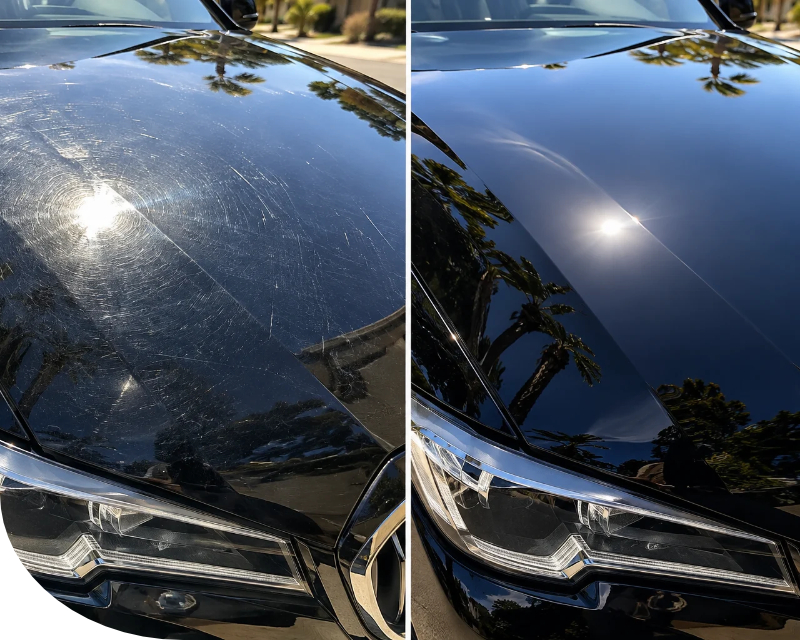
Dust settles on the hood. Water spots appear on the doors. In direct sunlight, you notice fine circular scratches that weren’t obvious when the car was parked in the shade.
Black paint can be frustrating to maintain, especially in San Diego, where strong sun, coastal moisture, dusty roads and outdoor parking create constant challenges.
The good news is that keeping a black car looking good doesn’t require washing it every day or buying expensive cleaning products. The biggest difference comes from how you wash, dry and handle the paint between washes.
Some common cleaning habits actually create the scratches owners are trying to avoid.
Here’s what matters, what you can safely do yourself, and when professional detailing can help.
In this Article
- Why Black Cars Show Scratches, Dust and Water Spots So Easily
- How to Wash a Black Car Without Adding Scratches
- Why Black Cars Develop Swirl Marks
- How to Prevent Water Spots on Black Paint
- Why a Black Car Can Still Look Dirty After Washing
- Does Ceramic Sealant Help Keep a Black Car Clean?
- How Often Should You Wash a Black Car in San Diego?
- Five Habits That Make Black Paint Harder to Maintain
- When Professional Detailing Makes Sense for a Black Car
- Keeping a Black Car Looking Good Starts With Better Maintenance
Why Black Cars Show Scratches, Dust and Water Spots So Easily
Black paint isn’t necessarily softer or easier to scratch than other colors. Its main disadvantage is that imperfections are easier to see.
On a clean, glossy black panel, reflected light creates a strong contrast. Fine scratches interrupt that reflection, making them particularly noticeable in direct sunlight.
This explains why a black car can look nearly perfect inside a garage but show hundreds of fine marks when you pull it into the sun.
The same contrast makes dust, dried mineral deposits and pollen stand out.
Three common problems are often confused:
- Swirl marks: Fine scratches in the clear coat, often visible as circular patterns around reflected sunlight.
- Water spots: Mineral deposits left behind when water evaporates. Some can eventually leave marks that require polishing.
- Surface contamination: Bonded particles such as road film, industrial fallout and other deposits that make paint feel rough even after washing.
These problems require different solutions.
A good wash removes loose dirt. It doesn’t necessarily remove bonded contamination, and it cannot repair scratches already present in the clear coat.
Understanding that distinction can save you from unnecessary products and aggressive cleaning methods.
How to Wash a Black Car Without Adding Scratches
The safest way to maintain black paint is to reduce friction between dirt and the surface.
Many swirl marks develop during ordinary washing and drying. Small particles trapped in a towel or wash mitt can drag across the clear coat, leaving fine scratches that gradually accumulate.
A careful wash should follow a consistent process.
Start With a Thorough Rinse
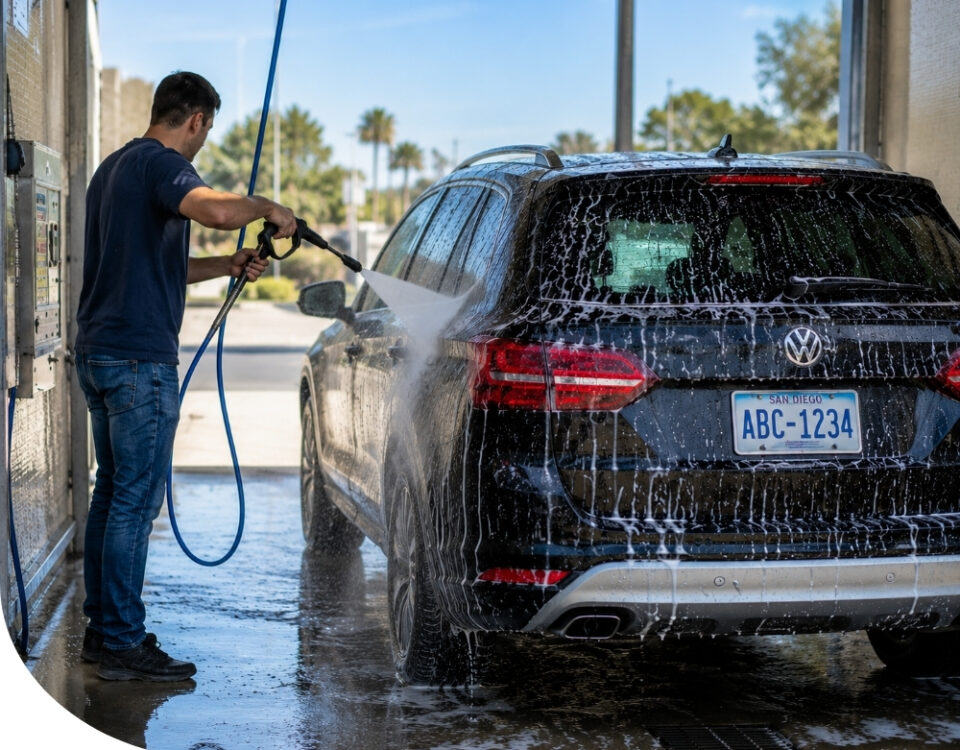
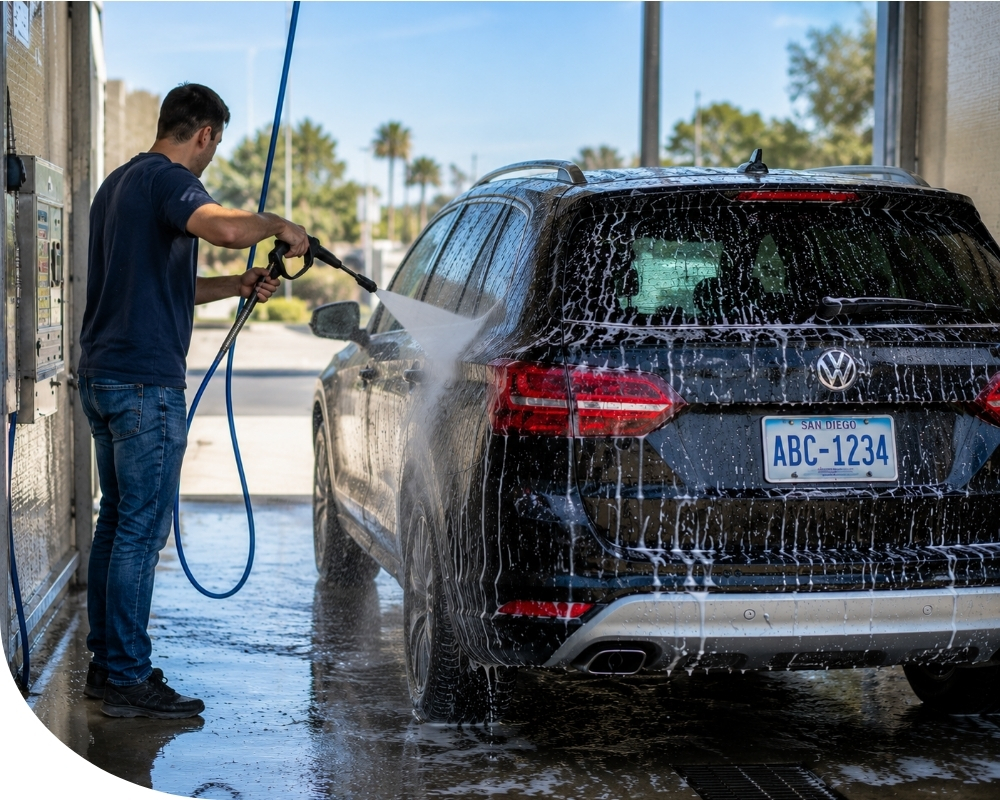
Before touching the paint, rinse the vehicle thoroughly to remove loose dirt, sand and road debris.
Pay attention to the lower doors, rocker panels, bumpers and areas behind the wheels. These surfaces often collect the heaviest contamination.
If you start wiping a dirty black car immediately, you’re increasing the chance of dragging abrasive particles across the paint.
A pre-rinse won’t remove everything, but it reduces the amount of dirt the wash mitt needs to handle.
Use a Clean Wash Mitt and Automotive Shampoo
Choose a quality microfiber or soft wash mitt and a pH-balanced automotive shampoo.
Use clean water and rinse the mitt frequently. A separate rinse bucket with a grit guard can help keep dirt from returning to the paint.
Work from the cleaner upper panels toward the dirtier lower sections. Save heavily contaminated areas for last.
Use light pressure and let the shampoo provide lubrication.
Avoid household dish soap, abrasive sponges and brushes intended for wheels or tires.
A black car needs careful washing because any damage is easier to notice afterward.
Wash in the Shade When Possible
Washing a black car in direct sunlight can be particularly difficult.
Dark panels absorb solar energy and may become hot enough that water and shampoo begin drying before you can rinse them.
That increases the risk of water spots and leftover product residue.
Early morning, late afternoon or a shaded location generally makes the process easier.
If shade isn’t available, work on smaller sections and rinse frequently. Don’t allow shampoo to dry on the surface.
Dry the Car Without Rubbing Dirt Into the Paint
Drying is one of the most overlooked sources of fine scratches.
After washing, use a clean, soft microfiber drying towel designed for automotive paint. A dedicated automotive blower can also remove water from mirrors, trim, badges and panel gaps with minimal contact.
Avoid using an old bath towel, household rag or the same microfiber towel that cleaned the wheels.
Don’t apply heavy pressure or repeatedly scrub a section that still feels gritty.
If you notice remaining dirt while drying, rinse and clean that area again before touching it with a towel.
The important rule is simple: Never use a drying towel to remove dirt that should have been washed away.
Why Black Cars Develop Swirl Marks
Swirl marks are among the most common complaints from black-car owners.
Despite their name, these marks aren’t always circular scratches. They are usually numerous fine scratches running in different directions. Under a concentrated light source, they create the familiar spiderweb pattern.
Several everyday habits contribute to them.
Automatic Car Wash Brushes
Brush-style automatic car washes can retain dirt from previous vehicles. As those brushes contact the paint, trapped particles may create fine scratches.
Repeated visits can gradually increase visible swirl marks, especially on black finishes.
Touchless washes avoid brush contact, although they have their own limitations. They may leave bonded road film behind and can rely on stronger cleaning chemicals.
Wiping Dust Off a Dry Car
This is one of the easiest ways to damage black paint.
You notice a thin layer of dust on the hood and reach for a microfiber towel. The towel feels soft, so the process seems harmless.
But dust can contain abrasive particles. Moving those particles across dry paint can create fine scratches.
The same problem occurs when people use a dry detailing cloth to remove pollen, road dust or sand.
If the vehicle is visibly dusty or gritty, washing is safer than dry wiping.
A quick-detail spray provides lubrication for very light contamination, but it isn’t a substitute for washing a dirty car.
Using Contaminated Towels
A microfiber towel can scratch paint if it contains grit.
This is particularly important when cleaning wheels, door jambs and lower body panels. Towels used in those areas should never be returned to painted upper panels without proper washing.
Keep separate towels for paint, glass, wheels and interior surfaces.
Also avoid placing clean towels on the ground, even briefly.
Repeatedly Trying to Remove a Stubborn Spot
Bird droppings, dried sap and water spots can tempt owners to scrub harder.
Unfortunately, extra pressure often creates a second problem: scratches surrounding the original contamination.
Use an appropriate automotive cleaning product, allow enough time for it to work, and avoid aggressive rubbing.
If the mark won’t come off safely, stop before damaging the clear coat.
Can You Remove Swirl Marks From a Black Car?
Washing and waxing won’t remove scratches from the clear coat.
Some products temporarily reduce their visibility by filling minor imperfections or improving surface gloss, but the marks may return as those products wear away.
Actual scratch removal generally involves polishing the clear coat with appropriate equipment and compounds.
Polishing works by leveling a very small amount of the surrounding clear coat. This is why it should be approached carefully, especially on vehicles that have already undergone repeated polishing.
Not every scratch can be safely removed.
A deep scratch that extends through the clear coat or into the color layer may require paint repair.
Before paying for correction, it’s worth identifying whether you’re looking at:
- Light wash-induced swirl marks
- Isolated scratches
- Water-spot etching
- Haze from previous polishing
- Clear-coat deterioration
These conditions can look similar to an untrained eye but require different treatment.
If your black car has visible swirl marks, send Michael photos taken in direct sunlight. He can assess the condition and discuss which of Pristine Auto Detail’s exterior services are appropriate. More extensive paint correction may require a specialist.
How to Prevent Water Spots on Black Paint
Water spots are especially noticeable on black vehicles because dried minerals often leave pale outlines against the dark finish.
San Diego drivers encounter them from sprinklers, washing with mineral-rich water, and droplets that dry on hot paint.
There are two different situations to recognize.
Surface mineral deposits remain on top of the clear coat. Depending on their severity, they may be removable with an appropriate automotive water-spot product.
Etched water spots have affected the clear coat itself. They may remain visible after the mineral deposits have been removed and sometimes require polishing.
The best approach is prevention:
- Avoid washing in direct sunlight.
- Dry the vehicle before water evaporates.
- Keep the car away from sprinkler overspray where possible.
- Remove fresh mineral deposits before they remain on the paint for an extended period.
- Maintain an appropriate protective sealant.
Don’t use abrasive pads or aggressively scrub dried water spots.
Household acids and improvised cleaning mixtures can also create problems when used incorrectly on automotive finishes.
For more detail on identifying mineral deposits and knowing when polishing may be necessary, read our guide on how to remove water spots from car paint.
Why a Black Car Can Still Look Dirty After Washing
Sometimes the car is clean, but the paint doesn’t look or feel smooth.
You may notice that the surface feels slightly rough when you gently touch it after washing. Or the reflections appear less crisp than they used to.
This can happen when contamination remains bonded to the finish.
Regular shampoo is designed primarily to remove loose dirt and road film. It may not remove embedded industrial fallout, certain environmental deposits or other bonded particles.
A clay bar treatment can remove some of this contamination and leave the paint feeling smoother.
However, clay isn’t a universal solution.
Improper clay use can create marring, particularly noticeable on black paint. Clay also doesn’t remove scratches already present in the clear coat.
If the finish feels rough after a proper wash, professional inspection can help determine whether a clay bar treatment is appropriate.
There is no reason to clay a black car at every wash. The treatment should be based on actual contamination.
Does Ceramic Sealant Help Keep a Black Car Clean?
A good ceramic sealant can make maintaining black paint easier.
It adds a protective layer that improves water repellency and can reduce how strongly some dirt and contaminants adhere to the surface.
For black-car owners, the most useful benefits are practical:
- Water tends to bead and run off more readily.
- Routine washing may require less effort.
- The finish can maintain a glossy appearance.
- The paint gains an additional layer of protection against everyday environmental exposure.
But it’s important to understand what ceramic sealant cannot do.
Ceramic sealant does not make paint scratchproof.
A dirty wash mitt can still leave swirl marks. A towel dragged across dusty paint can still scratch the surface. Mineral-heavy water can still leave spots if it dries on the vehicle.
Sealant also doesn’t remove existing swirl marks. Those must be addressed separately if correction is needed.
Pristine Auto Detail offers ceramic sealant in San Diego as part of its exterior protection services.
For someone who regularly washes a black vehicle, sealant can be a useful maintenance aid, but careful washing remains essential.
How Often Should You Wash a Black Car in San Diego?
There isn’t one schedule that works for every black car.
A vehicle parked in a garage and driven occasionally may stay clean considerably longer than one parked outside near the coast.
For many daily-driven black cars, washing approximately every one to two weeks is a reasonable starting point. Adjust that schedule according to how quickly contamination accumulates.
Consider washing sooner if the vehicle has been exposed to:
- Coastal salt residue
- Heavy road dust
- Bird droppings
- Tree sap
- Sprinkler overspray
- Mud or sand
Bird droppings and insect residue deserve prompt attention because prolonged exposure can damage the finish, particularly when the surface becomes hot.
The goal isn’t to wash a black car as frequently as possible.
Every contact wash introduces some opportunity for scratching. The aim is to remove harmful contamination using a careful process.
What About Parking Near the Beach?
San Diego’s coastal environment creates a few additional considerations.
A black vehicle parked near the beach may collect airborne salt, fine sand and moisture. Cars driven through beach parking lots can also accumulate abrasive particles around the lower panels.
Don’t wipe sand or salty residue from dry paint.
Rinse thoroughly before using a wash mitt, paying attention to the lower body panels and wheel areas.
If the car spends most of its time outdoors in places such as Carlsbad, Encinitas, Del Mar or La Jolla, regular maintenance and paint protection are especially worthwhile.
Five Habits That Make Black Paint Harder to Maintain
Most black-car owners don’t damage their paint through one major mistake. The finish gradually loses its appearance through small habits repeated over time.
Here are five worth changing.
- Trying to keep the car spotless every day. Constantly wiping away dust can create more scratches than leaving a light layer of dust until the next proper wash.
- Using the same towel for everything. Wheel residue, sand and grime from door jambs don’t belong on a paint-drying towel.
- Letting wash water dry on hot panels. This increases the chance of mineral deposits and water spots.
- Treating every blemish with polish. Polishing removes a small amount of clear coat. It shouldn’t become routine maintenance for minor dirt or removable deposits.
- Assuming protection replaces careful washing. Wax and ceramic sealant help protect the finish, but neither prevents damage from abrasive contact.
Changing these habits often does more for long-term paint appearance than buying another bottle of detailing spray.
When Professional Detailing Makes Sense for a Black Car
Maintaining black paint yourself is entirely possible if you have the right products, a suitable washing area and enough time to work carefully.
Professional detailing becomes useful when the vehicle needs deeper cleaning, surface decontamination or protection beyond a regular wash.
For example, you may notice:
- Rough paint that remains after washing
- Persistent water spotting
- Road film that ordinary shampoo doesn’t remove
- A dull or uneven-looking finish
- Contamination from outdoor parking
- Difficulty maintaining the vehicle without adding scratches
An exterior detail can address accumulated contamination and prepare the finish for suitable protection.
At Pristine Auto Detail, Michael works directly on each vehicle, bringing the equipment, water and power needed for mobile detailing to your location. With over 20 years of detailing experience, he can examine the condition of the finish and recommend an appropriate exterior service. If your primary concern is extensive swirl marks, deep scratches or paint correction, explain that before booking so the work can be assessed accurately.
Keeping a Black Car Looking Good Starts With Better Maintenance
Black paint rewards careful maintenance, but it also makes poor washing habits easy to spot.
The most important things are to remove loose dirt before touching the surface, use clean wash materials, avoid wiping dusty paint, dry the vehicle properly and deal with contamination before it becomes a bigger problem.
Professional detailing can help when ordinary washing is no longer enough or the paint needs additional protection.
If you own a black car in San Diego and aren’t sure what the finish needs, contact Michael at Pristine Auto Detail.
Send a few clear photos of the paint, preferably taken in sunlight, and describe the problems you’re noticing. He can help determine whether exterior detailing, clay bar treatment or ceramic sealant is suitable.
Call or text (760) 822-6363 to discuss your vehicle or request a quote.